Electric linear actuators are increasingly preferred over hydraulic and pneumatic systems for applications requiring precise, repeatable linear motion, even in extreme environments. Fully sealed housings protect internal mechanics and electronics from dust, moisture, corrosion, and shock, while maintaining consistent force and precise positioning. With the right specification, electric linear actuators are well-suited to high-force, heavy-duty industrial operations, as well as hygienically sensitive applications such as food & beverage production.
Gerard Bush, engineer at motion specialist INMOCO, explains.
When an application requires linear motion, electric linear actuators are the prime choice when precise and repeatable performance is required. Compared to rotary motors and their required mechanical linkages, electric linear actuators minimise the challenges of backlash, friction, and variability. Instead, contrasting with hydraulic and pneumatic actuators, electric linear actuators remove the maintenance problems associated with traditional designs, while still being capable of high force, as well as improved control precision.
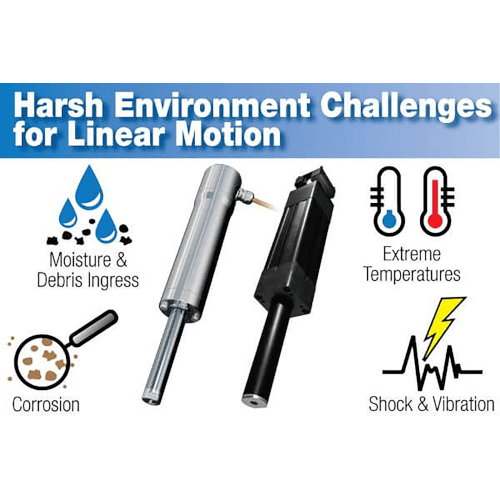
Even when traditional hydraulic and pneumatic actuators have been preferred for harsh environmental conditions, today’s designs of electric linear actuators are often more robust and longer lasting. Situations that test extreme temperature resistance, debris and moisture ingress, corrosion, as well as shock and vibration, are critical to a range of linear motion requirements. These applications often take place in outdoor settings exposed to the elements and involving high loads. However, indoor applications can demand the strongest resilience to harsh conditions, whether that’s the durability demanded by heavy industry, or ensuring critical factors are met, such as hygiene standards essential to the pharmaceutical and food & beverage sectors.
Comparison with hydraulic and pneumatic technology
The durability of electric linear actuators mainly results from the design and materials involved with the housing, materials, and seals. These designs can exert forces up to 294 kN (66,000 lbf), comparable to a hydraulic or pneumatic system yet occupying a significantly more compact footprint. Shock loads can also be managed with features such as steel heads with integrated trunnions, allowing the mechanical connection to pivot.
However, a key advantage is that electric designs keep working in harsh conditions when the performance of hydraulic and pneumatic systems starts to fail. Electric linear actuators from brands like Tolomatic can operate in temperature extremes above 100°C and below 0°C thanks to specially prepared motor windings, as well as sealed bearings with temperature-appropriate lubrication. Thermal limitations of pneumatic systems include condensation and freezing, while high temperature can impact performance if pressure isn’t precisely and reliably regulated. For hydraulic systems, the impact of temperature extremes on oil viscosity and seal life can also present performance challenges, which requires attention in regular maintenance.
Sealed housing optimises protection
A common challenge of extreme environments is protecting against the ingress of dust and moisture. Pneumatic designs can be susceptible to dust ingress where the rod exits the actuator, and protective boots are often needed to protect this area, particularly in wet environments. Hydraulic systems can also require additional protection around seals, and while seal wear leads to oil leaks, damage to this barrier also exposes vulnerabilities for ingress.
Alternatively, an advantage of electric designs is that sealed housings protect internal mechanics and electronics, whereas hydraulic and pneumatic actuators are primarily designed to contain internal pressure, hence the need for coverings to protect exposed areas. The sealed body of the electric actuator also carries a standardised ingress protection rating, presenting straightforward identification of its capabilities. Tolomatic actuators are rated up to IP69K, suitable for high-pressure, high-temperature wash downs required in hygienic applications. These designs can also be configured with stainless steel and hygienic hardware that prevents corrosion from moisture, chemicals, or washdown processes.
Real-world advantages
Looking at electric linear actuators in real use cases, the moulding operation of an automated sand casting line in a steel foundry replaced its hydraulic actuators with two Tolomatic RSX15 Extreme Force Rod-Style Actuators. Generating 66 kN (15,000 lbf) force to move steel castings from their moulds, the electric designs eliminated the cost and downtime required to maintain the hydraulic system.
A further example of a typical heavy-duty environment involved a high-speed train carriage manufacturer aiming to find a solution to wheel wear, where a key challenge was meeting the regulations required by the rail industry for fire, smoke, and vibration. To steer the carriage wheels through curves and reduce friction, Tolomatic worked with the manufacturer to develop a customised version of its IMA44 integrated linear servo actuator. This design met the required shock, vibration, and fire standards, which no other actuator available on the market at the time could achieve.
Meanwhile, in battery manufacture, a key challenge is corrosion, particularly for applications such as acid bottle handling. To combat this challenge, as well as preventing elastomer seals from degrading, Tolomatic provided a battery manufacturer with its RSH series actuator, specifically developed for use within corrosive environments. Constructed from high-grade 316 stainless steel, compared to the lower resilience 300 series steels common to other actuator designs, the RSH actuator also features PTFE seals, providing increased resilience against corrosive chemicals compared to nitrile or other elastomeric seal materials.
Hygienic applications
Using linear actuators in harsh environments can also mean protecting manufacturing produce, as well as ensuring the lifetime of the actuator, which is particularly the case in food production. A cheese manufacturer that wanted to replace the hydraulic cylinders on its cutting application with electric designs to eliminate the contamination risk from leaking hydraulic fluids. To achieve this, Tolomatic provided its all-stainless steel RSH30 Hygienic Electric Actuator with IP69k protection and integrated motor to provide a hygienic, long-lasting solution.
Motion control specialist INMOCO distributes Tolomatic actuators in the UK and can provide support in specification, as well as advising on the customisation options available to OEMs. To create a complete linear motion solution for harsh environments, INMOCO can also specify gearboxes, servo drives and motors, as well as ruggedised controllers.
While hydraulic and pneumatic linear actuators are still an option for applications demanding the very highest forces, increasingly OEMs and end users are replacing these systems with electric designs. For new projects, the advantages of precision, reliability, and cleanliness mean that electric linear actuators are the favoured choice for virtually all industrial applications.